
Drive around Perth for long enough, and you’ll spot plenty of signs that say “tavern”. It’s easy to assume it’s just an old-fashioned word for a bar, and to be fair, the line between a tavern and bar has blurred over the years. Both pour a cold beer, both have a wine list, and plenty of them will happily make you a cocktail. The two words still mean different things, though, and the difference comes down to food, feel and, here in Western Australia, the licence behind the counter.
Below, we’ll give you the quick answer on tavern vs bar, compare both with the good old Aussie pub, and what WA licensing actually says.
What Is the Difference Between a Tavern and a Bar?
A tavern is a relaxed local that serves food and drinks, built around meals, regulars and community. A bar puts drinks first, treats food as optional and is built around atmosphere. In Western Australia there’s a legal difference too: “tavern” is an official liquor licence class, while “bar” is usually just a trading name.
Of course, real venues rarely stick to one script. A suburban tavern might run a cocktail list and bring in a DJ on Saturday nights, while a bar down the road might serve a burger good enough to be the main event. The sign out front gives you a feel for the style a venue is going for, but it won’t always tell you what that venue can legally do. We’ll come back to that shortly.
What Is a Tavern?
A tavern is a licensed venue that serves alcohol alongside meals, usually in a casual, community setting. Walk into a typical Aussie tavern, and you’ll probably find a bistro or counter meals, a beer garden, sport on the screens (often with a TAB) and a handful of regulars who know the staff by name. It’s the kind of place where you bring the family for a parmi at lunch, then come back with your mates for the footy that night.
Food is a big part of most taverns, but it isn’t actually a licence requirement, so if you’re planning to eat, it’s worth checking the menu and kitchen hours first.
The word itself goes back a long way, to the Latin taberna, meaning a shop or stall. For centuries, taverns and inns lived side by side: the inn was where travellers slept, and the tavern was where they ate and drank. That old split still shapes how Australians use the word, because “tavern” usually describes a suburban pub that doesn’t offer rooms.
What Is a Bar?
A bar is a venue where drinks (beer, wine, spirits and cocktails) are the main offer, usually served across a counter. That counter is actually where the name comes from: the “bar” separating staff from customers. The word can also describe just the counter itself, which is why plenty of restaurants have a bar without operating as one. When a bar does serve food, it tends to lean towards share plates, fries or a cheese board rather than a full meal.
Bars also come in more styles than taverns. A cocktail bar is all about the craft behind the drink, often with low lighting and a date-night feel, while a wine bar swaps the long beer list for a long wine list and smaller plates. Sports bars swing the other way, with big screens, game-day crowds and usually a proper kitchen. Then there are small bars, the intimate spots that, in WA, have a legal cap on how many people can be inside at once.
Tavern vs Bar: Key Differences at a Glance
If you just want the short version, this table puts a tavern, a bar and a pub side by side.
Pub vs bar vs tavern: a quick comparison
|
Tavern |
Bar |
Pub |
|
|
Main focus |
Food, drinks and community |
Drinks and atmosphere |
Beer, meals and the local crowd |
|
Food |
Full meals, counter meals or bistro |
Optional; snacks or share plates |
Counter meals and pub classics |
|
Atmosphere |
Relaxed, family-friendly |
Social, stylish or lively |
Casual, unpretentious |
|
Typical crowd |
Locals, families, regulars |
Friends, couples, after-work groups |
Locals, sports fans, regulars |
|
Entertainment |
Sport on screens, live music, karaoke |
DJs, playlists, sometimes live acts |
Sport on screens, TAB, live bands |
|
Opening hours (typical) |
Lunch till late |
Afternoon or evening till late |
Lunch till late |
|
Takeaway alcohol (WA) |
Depends on licence |
Depends on licence |
Depends on licence |
|
Accommodation |
Usually none |
None |
Sometimes (many older “hotels”) |
Keep in mind these are typical traits, not rules. When it comes to what a venue can actually do, the licence has the final say.
Pub vs Bar vs Tavern: What Do Australians Mean?
Here in Australia, “pub” is the word most of us reach for first, and it covers just about any casual local with a bar and a kitchen. You might notice that plenty of pubs also call themselves a “Hotel”. That’s a leftover from the days when the right to sell liquor was tied to offering rooms, so publicans built accommodation upstairs. Many of those hotels haven’t rented out a room in decades, but the name stuck.
“Tavern” tends to signal a suburban local built without rooms, usually with a bistro and a beer garden. “Bar” stretches from a CBD cocktail lounge all the way to a tucked-away laneway small bar. And “saloon”? That one’s mostly American, and you’ll know it from Westerns.
In everyday conversation, one venue can easily be all three. You might call it the pub, the sign might say tavern and your mate might call it a bar, and nobody would be wrong. The law, however, draws its lines somewhere else.
How WA Liquor Licences Define Taverns and Bars
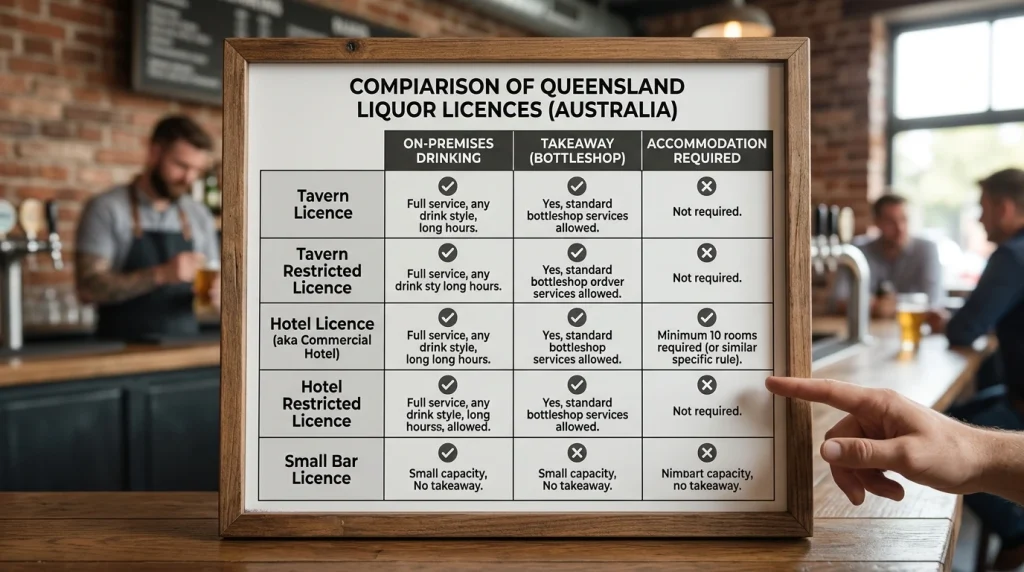
In Western Australia, those lines come from the Liquor Control Act 1988, which provides for 11 types of liquor licence, administered by Racing, Gaming and Liquor and the Director of Liquor Licensing. Four of them (hotel, hotel restricted, tavern and tavern restricted) are treated as versions of the same hotel licence, and what separates them is how they’re allowed to trade.
Tavern and Tavern Restricted Licences
A tavern licence lets a venue serve drinks on the premises and sell takeaway (packaged liquor), and the venue doesn’t need to offer accommodation. A tavern restricted licence works the same way, except takeaway isn’t allowed, so all drinking has to happen on site.
Hotel and Hotel Restricted Licences
A hotel licence covers both on-premises drinking and takeaway, but the venue must provide accommodation. A hotel restricted licence also requires accommodation, while limiting sales to on-premises drinking, with takeaway available only to lodgers.
Small Bar Licence
The small bar licence is a category of its own. It allows on-premises drinking only, with no takeaway, and no more than 150 people can be on the premises at any one time.
So Is There a “Bar Licence”?
You might have noticed there’s no general “bar licence” in WA. Apart from the small bar category, “bar” is simply a trading name. A venue calling itself a bar could be operating under a small bar, tavern restricted, tavern, nightclub or another licence altogether, and each licence can come with its own extra conditions.
Can Under-18s Go to a Tavern or Bar?
Under-18s can only be on licensed premises in WA in limited situations. Examples include being with a responsible adult, such as a parent or guardian, or being there for a meal. Individual licences can add further conditions, so it’s always a good idea to check with the venue first. The WA Government’s Juveniles on Licensed Premises Juveniles on licensed premises fact sheet covers the details.
Disclaimer: This is a general summary of WA liquor laws as at November 2026, not legal advice. Licence conditions vary by venue, so for advice on a specific situation, contact Racing, Gaming and Liquor on (08) 6551 4888.
Tavern or Bar: Which Should You Choose?
In the end, the right pick depends on the kind of night you’re after. For a meal and the footy with family or friends, a tavern or pub is hard to beat, with a proper kitchen, big screens and room for the kids. For cocktails or a date-night drink, a bar (especially a cocktail or wine bar) usually sets the mood better.
Planning a birthday, reunion or work do? Look for a venue with dedicated functions space and a full kitchen, so the food, drinks and setup are all sorted in one place. And for a quick drink after work, either will do. Just pick whichever is closest and has a free seat in the beer garden.
The Russell Inn: A Morley Local That Does Both
That mix of good food, cold drinks and community is exactly what we’re about at The Russell Inn Bar & Restaurant, at 137A Russell St in Morley. Every week we see both sides of the tavern vs bar debate walk through our doors: families popping in for lunch and a coffee, and mates settling in for a pint and the footy. Coffee and cakes start from 10 am, lunch is on from 11:30 am, and the bar stays open till late, seven days a week.
Our kitchen serves pub favourites, from parmis and steaks to burgers and share plates, with a different special every day.
Have a look at our food and drinks menu, see what’s on this week or read more about our Sports Bar in Morley sports bar in Morley. Looking for a gift for a fellow pub lover? Our gift vouchers are a crowd-pleaser.
Ready to come in? Book a table or give us a call on 08 6146 2333.
FAQs
Is a tavern the same as a pub?
In everyday Australian use, pretty much. Both are casual locals serving beer and counter meals, and most people use the words interchangeably. The difference usually comes down to history and branding: “pub” is the catch-all, “hotel” names often date back to when rooms were required, and “tavern” tends to mean a suburban pub without accommodation.
What is another name for a tavern?
You’ll hear pub, inn, alehouse, local and, in Australia, hotel. Each carries a slightly different meaning. An inn traditionally offered rooms, an alehouse focused on beer, and your “local” is simply the regular spot down the road. In Western Australia, “tavern” is also a formal liquor licence class under the Liquor Control Act 1988.
What is another word for a bar?
Pub, lounge, tavern and watering hole all work, and Americans might say saloon. Each hints at a slightly different style: a lounge is usually quieter and more upmarket, while a watering hole is casual slang for your usual spot. In WA, “small bar” also has a specific meaning, as a liquor licence capped at 150 people.
Are taverns still a thing in Australia?
Absolutely, especially in the suburbs. Plenty of Perth venues still carry “tavern” in their name, and WA’s Liquor Control Act 1988 keeps tavern and tavern-restricted licences as active categories. Today’s tavern usually looks like a family-friendly pub, complete with a bistro, a beer garden and sport on the big screens.
Can a bar sell takeaway alcohol in WA?
That depends on the venue’s licence, not its name. Small bar and tavern restricted licences only allow drinking on the premises, so takeaway is off the table. A venue holding a full tavern or hotel licence can sell takeaway, subject to its conditions. If you’re not sure, just ask the staff what their licence allows.
What’s the difference between a tavern and an inn?
Traditionally, an inn gave travellers a place to sleep as well as food and drink, while a tavern served food and drink without the rooms. That distinction still shows up in WA licensing today, since a hotel licence requires the venue to provide accommodation and a tavern licence doesn’t.